Inside the Tooth: What Happens Before Root Canal Treatment Becomes Necessary | Rosa Dental Center in Elizabeth, NJ
Most people associate root canal treatment with sudden discomfort or an urgent dental visit. What often goes unnoticed, however, is that the need for a root canal usually develops quietly over time. Long before treatment is recommended, a series of changes occur deep within the tooth - changes that many patients never feel until later stages.
Understanding what happens inside a tooth helps remove uncertainty and replaces fear with clarity. Modern dentistry focuses not only on treatment but also on education, helping patients recognize how small dental concerns gradually evolve into conditions requiring advanced care.
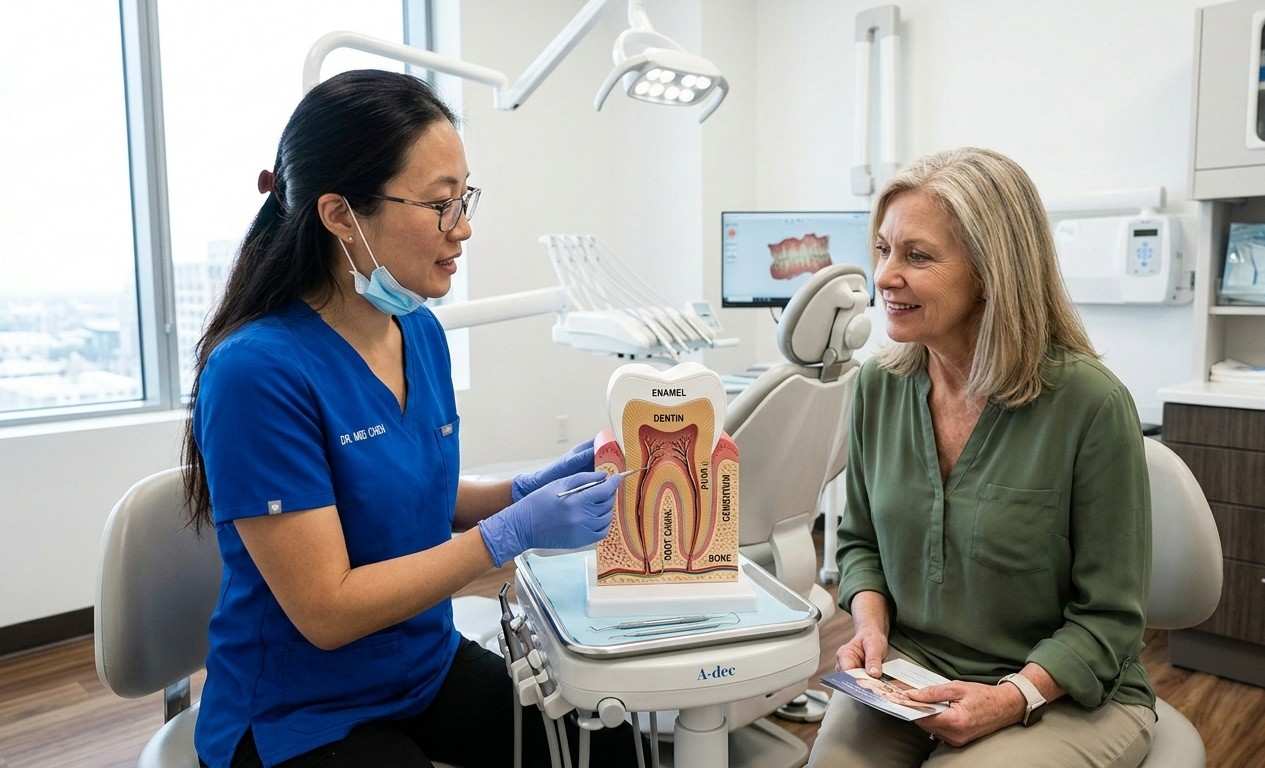
A Look Beneath the Surface: The Structure of a Tooth
From the outside, teeth appear solid and unchanging. Internally, however, each tooth contains living tissue responsible for sensation and nourishment.
A tooth consists of several layers working together:
- Enamel – the strong outer shield protecting the tooth
- Dentin – a porous middle layer beneath enamel
- Pulp – soft inner tissue containing nerves and blood vessels
- Root canals – pathways connecting the pulp to surrounding bone
The pulp plays an important role during tooth development, but once a tooth is fully mature, it can continue functioning even if the pulp becomes compromised. Root canal treatment focuses on protecting the tooth structure when inner tissues are affected.
Stage One: When Minor Problems Begin Quietly
The earliest phase leading toward root canal treatment often begins with subtle enamel damage. This may result from decay, cracks, repeated stress, or deep restorations. At this stage, symptoms are usually minimal or nonexistent. Because enamel has no nerves, early changes may go completely unnoticed.
Common early contributors include:
- Small cavities developing between teeth
- Hairline cracks from chewing pressure
- Worn enamel from grinding habits
- Old dental restorations weakening over time
- Deep fillings placed close to the nerve
Regular dental visits are important during this phase because dentists can detect changes before they progress deeper.
Stage Two: Dentin Becomes Involved
Once damage moves past enamel, it reaches dentin - a softer layer containing microscopic channels that connect to the pulp. Unlike enamel, dentin can transmit sensations. Patients may begin noticing temporary sensitivity, especially with temperature changes.
Typical signs during this phase may include:
- Brief sensitivity to cold drinks
- Mild discomfort when eating sweets
- Occasional awareness while chewing
- Sensitivity that fades quickly
At this point, treatment may still be relatively simple. Addressing concerns early often prevents deeper involvement. Patients searching for a top dentist near Elizabeth frequently benefit from early evaluations that stop progression before more complex care becomes necessary.
Stage Three: Pulp Irritation and Inflammation
As bacteria or irritation approach the pulp, the inner tissue begins reacting defensively. Because the pulp exists within a confined space, inflammation creates pressure inside the tooth. This phase is known as pulpitis - inflammation of the pulp tissue.
Early pulp irritation may cause:
- Lingering sensitivity after hot or cold foods
- Intermittent throbbing sensations
- Increased discomfort when biting
- Sensitivity that lasts longer than before
At this stage, the tooth is signaling that deeper tissues are affected. Prompt evaluation from a top-rated dentist near you may still allow intervention before irreversible damage occurs.
Stage Four: When the Pulp Can No Longer Recover
If irritation continues, the pulp may lose its ability to heal. Blood supply becomes compromised, and bacteria can multiply inside the tooth's inner chamber. Interestingly, discomfort may temporarily decrease during this phase because nerve tissue begins losing vitality. Many patients mistakenly assume the problem has been resolved.
However, internal infection may continue developing silently.
Signs that the condition is advancing include:
- Persistent pressure sensations
- Gum tenderness near one tooth
- Tooth discoloration
- Sensitivity to biting rather than temperature
- Swelling around nearby tissues
This is typically the stage when root canal treatment becomes necessary to preserve the natural tooth.
Why Root Canal Treatment Is Recommended
Root canal therapy is designed to remove infected or inflamed pulp tissue while keeping the outer tooth structure intact. Rather than removing the tooth, treatment allows patients to maintain natural function and appearance. Modern root canal procedures focus on comfort and precision. Advances in technology have transformed treatment into a predictable and efficient process.
Root canal therapy helps:
- Eliminate internal infection
- Protect surrounding bone and tissues
- Preserve natural chewing ability
- Prevent spread of bacteria
- Maintain smile alignment
Patients seeking the best dentist near Elizabeth, NJ often discover that saving the natural tooth is both practical and beneficial for long-term oral health.
Warning Signs That Should Never Be Ignored
While not every symptom indicates a root canal is needed, certain changes suggest deeper evaluation is important.
Watch for:
- Sensitivity that lingers for minutes instead of seconds
- Discomfort when chewing or applying pressure
- Gum swelling near a specific tooth
- Darkening or discoloration of a tooth
- Recurring pimple-like bumps on gums
Early diagnosis allows dentists to recommend appropriate care before complications develop further.
The Role of Prevention in Avoiding Advanced Treatment
Although root canal treatment is highly effective, prevention remains the ideal approach. Many conditions leading to pulp damage develop gradually and can be addressed earlier with consistent care.
Helpful preventive habits include:
- Attending routine dental examinations
- Treating cavities promptly
- Wearing nightguards if grinding occurs
- Avoiding chewing hard objects like ice
- Maintaining thorough brushing and flossing routines
Preventive dentistry and orthodontic alignment together often reduce long-term stress on teeth.
Care at Rosa Dental Center in Elizabeth, NJ
Understanding what happens inside a tooth allows patients to make informed decisions about their dental health. Rosa Dental Center provides evaluations focused on early detection, patient education, and comfortable treatment planning.
Location:
500 Westfield Ave, Elizabeth NJ 07208
Service Areas:
Elizabeth (07201, 07202, 07206, 07207, 07208), Hillside (07205), Roselle (07203), Linden (07036), Union (07083, 07088), Irvington (07111), and Kenilworth (07033).
Patients throughout these communities often visit Rosa Dental Center when searching for a top-rated dental office near their location offering comprehensive and compassionate care.
A Different Way to Think About Root Canal Treatment
Root canal therapy is not the beginning of a dental problem - it is often the solution to one that has been developing quietly beneath the surface. Understanding the stages leading up to treatment helps patients recognize that dental care is a continuum rather than a single event.
Modern dentistry emphasizes preservation whenever possible. By identifying changes early and responding promptly to symptoms, patients can protect their natural teeth and maintain long-term oral health stability.
Education transforms uncertainty into confidence, allowing patients to approach treatment decisions with clarity instead of concern.
FAQs
Deep decay, cracks, repeated dental procedures, or trauma can allow bacteria to reach the inner pulp tissue, leading to inflammation or infection.
Once pulp damage becomes irreversible, professional treatment is typically required to prevent further complications.
Modern techniques and anesthesia make treatment comfortable, and many patients report relief afterward.
Routine dental visits, early cavity treatment, good oral hygiene, and protecting teeth from excessive pressure help reduce risk.
Yes. Preserving natural teeth helps maintain bite balance, chewing efficiency, and long-term oral health.